
How to Choose a Natural Chew for Your Dog
Choosing a chew for your dog can feel surprisingly complicated. Natural chews come in many different shapes, sizes and textures, and what works well for one dog may not be suitable for another.
The most important thing is to choose a chew that suits your dog's size, age, dental health and chewing style, then supervise them while they enjoy it.
Why Do Dogs Like to Chew?
Chewing is a natural behaviour for dogs. It can provide enrichment, help occupy dogs and give them an appropriate outlet for chewing behaviour.
Some specially designed dental chews can also help reduce plaque and tartar, but chewing should not be considered a replacement for regular dental care or tooth brushing.
What Makes a Dog Chew Appropriate?
No chew is completely risk-free. Dogs vary enormously in how they chew, so an appropriate choice for one dog may not be right for another.
When choosing a chew:
- Choose a size appropriate for your dog
- Avoid anything small enough to be swallowed whole
- Consider your dog's chewing strength and dental health
- Avoid extremely hard chews that could damage teeth
- Supervise your dog while chewing
- Remove the chew when it becomes small enough to swallow
- Provide fresh drinking water
If your dog tends to swallow large pieces rather than chew them, edible chews may not be suitable.
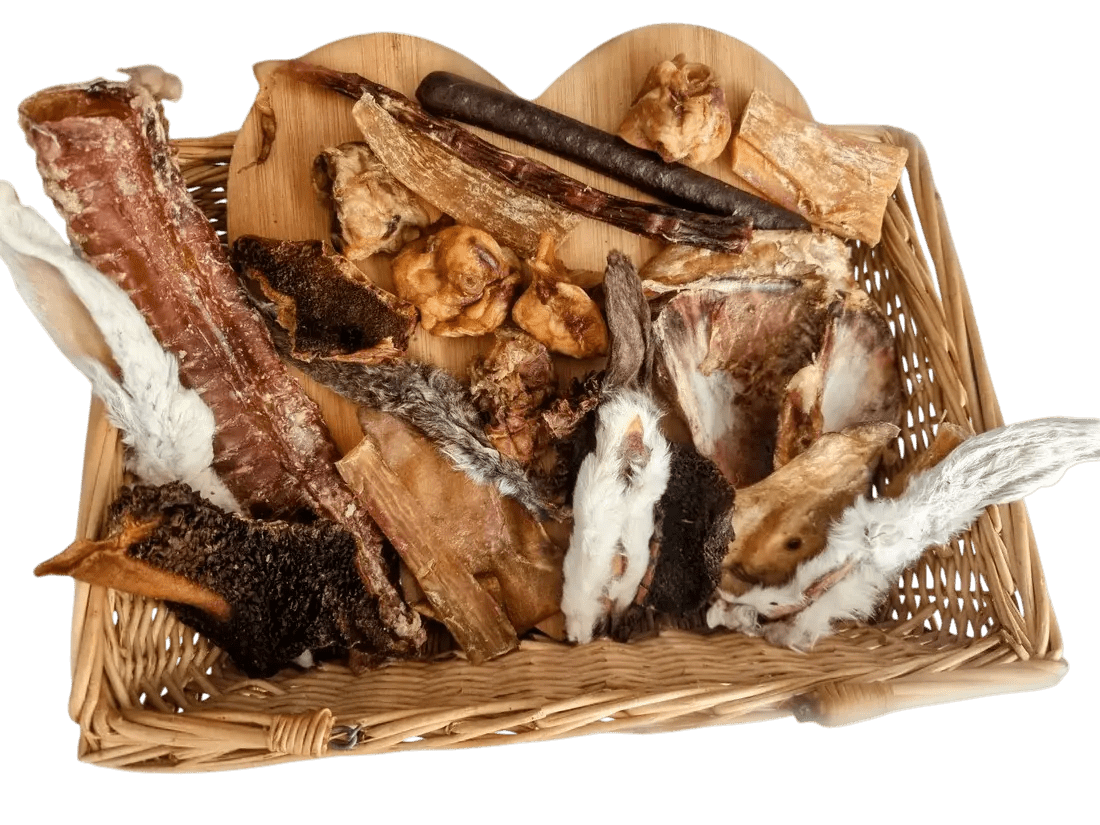
Natural Chews Available at Wiggle and Wag
At Wiggle and Wag, we stock a range of natural dog chews and treats. Different products offer different textures and chewing experiences, so it is worth choosing according to the individual dog rather than assuming one type is suitable for everyone.
Natural Cow Tails
Dried cow tails provide a firm, textured chew and can keep some dogs occupied for longer than softer treats.
Because they can be relatively hard, they should be chosen carefully for the individual dog and removed if your dog tries to swallow large pieces.
Beef Paddy Whack
Beef paddy whack is a dried beef chew with a tough texture. It can provide a longer chewing experience for some dogs and is commonly sold as a single-ingredient treat.
As with all firm chews, supervise your dog and make sure the size and texture are appropriate for their teeth and chewing style.
Chicken Feet
Dried chicken feet are a crunchy natural treat that many dogs enjoy. They are generally eaten more quickly than larger or tougher chews, so they may be better described as a treat than a long-lasting chew.
Choose an appropriately sized product and supervise your dog, particularly if they tend to swallow food quickly.
Rabbit Ears with Hair
Rabbit ears offer a lighter natural chew and may be useful for dogs that prefer a less substantial texture.
Rabbit is sometimes chosen by owners looking for a less commonly fed protein source, but no ingredient should automatically be described as hypoallergenic. Dogs with known food allergies or dietary sensitivities should be managed according to veterinary advice.
Pig Ears and Trotters
Pig ears and trotters are popular natural chews, but their texture and hardness vary considerably.
They can also be relatively rich, so portion size should be considered alongside the rest of your dog's diet. Very hard items may not be suitable for dogs with dental problems or dogs that chew extremely forcefully.
Dried Sprats
Dried sprats are small fish treats that provide a very different option from harder chews. They are generally eaten quickly and can be useful as a high-value treat rather than a long-lasting chew.
Because they are made from oily fish, they naturally contain omega fatty acids, but they should still be given as part of a balanced diet and in appropriate quantities.
Are Hard Chews Safe for Dogs?
Very hard chews can damage teeth. Veterinary guidance advises caution with items such as bones, antlers and other very hard products because they can cause cracked or fractured teeth.
A useful rule is to avoid chews that are so hard they have no give at all. If you are unsure whether a particular chew is suitable for your dog's teeth, ask your vet.
What About Bones and Rawhide?
Bones can cause several serious problems, including damaged teeth, choking, digestive obstruction and injuries to the digestive tract. For this reason, veterinary organisations including PDSA advise against feeding bones as dog chews.
Rawhide also requires caution. Large pieces can be swallowed and may create a choking or blockage risk, particularly for dogs that tear off and swallow pieces quickly.
How to Choose the Right Chew for Your Dog
Consider:
- Size: the chew should be too large for your dog to swallow whole
- Chewing style: powerful chewers may break or swallow products differently from gentle chewers
- Age: puppies and senior dogs may need different textures
- Dental health: dogs with damaged or sensitive teeth may require softer options
- Diet: treats and chews add calories and should be included in your dog's daily food allowance
- Food sensitivities: check the ingredients if your dog has known dietary restrictions
If your dog has dental disease, digestive problems, food allergies or another health condition, ask your vet before introducing a new type of chew.
Safe Chewing Habits
- Always supervise your dog with a chew
- Choose a product appropriate for your dog's size
- Remove small pieces before they can be swallowed whole
- Stop using a chew if it splinters or breaks into sharp pieces
- Take the chew away if your dog is trying to gulp large pieces
- Keep fresh drinking water available
- Remember that treats and chews should only form a small part of your dog's overall diet
Choosing Natural Dog Chews at Wiggle and Wag
There isn't one natural chew that is safest or healthiest for every dog. The right choice depends on the individual dog's size, age, teeth, diet and chewing behaviour.
At Wiggle and Wag, we can help you compare the natural chews we stock and choose an option appropriate for your dog. If you have concerns about your dog's teeth, digestion, allergies or general health, your vet is the right person to advise you before introducing a new chew.